

Can AI offset macro uncertainty?


 S&P 500 +0.79% last week to 7,165.08 US 10-year yield +5.6 basis points last week to 4.307%Spot gold -2.48% last week to $4,708.69 an ounceDXY +0.29% last week to 98.51
What to look out for today
Companies reporting on Monday, 27 April: Verizon
Key data to move markets today
EU: German GfK Consumer Confidence and a speech by ECB Board Member Isabel Schnabel
Global Macro Updates
AI driven rally. Amid a macro backdrop increasingly defined by geopolitical uncertainty, the evolving conflict in the Middle East, and its implications for energy markets, inflation expectations and global risk sentiment, US equities have found a notable pillar of resilience in the technology sector. Q1 earnings season has reinforced this, offering investors a pocket of clarity and optimism within an otherwise fragile environment.
Earnings momentum has been decisively constructive. The S&P 500’s blended Q1 earnings growth rate has risen to 15.1%, up from 12.6% at the outset of the reporting period and 13.2% the prior week. 81.3% of companies have exceeded earnings expectations, with aggregate surprises surpassing 12.3%, underscoring both operational strength and conservative forward guidance dynamics.
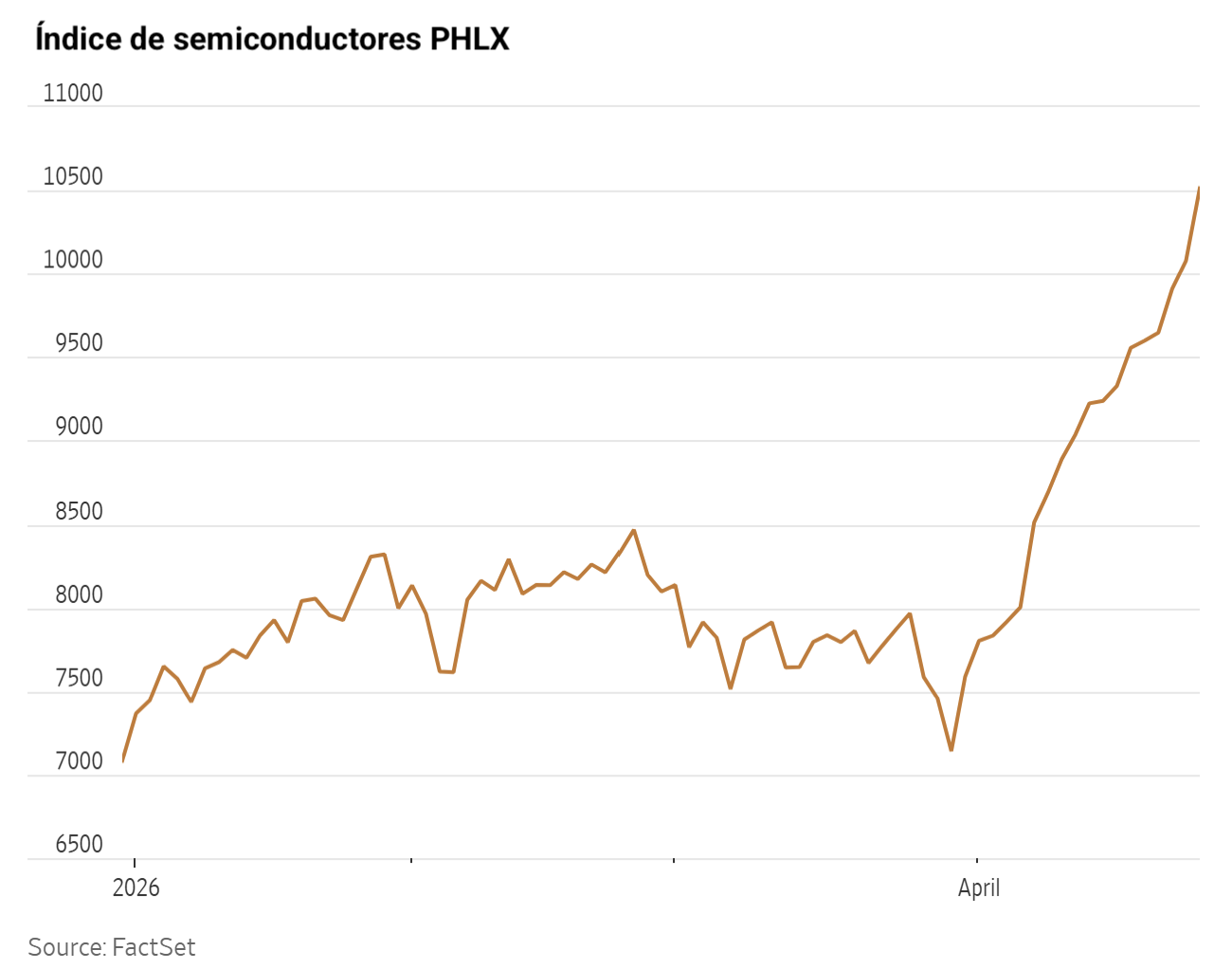
At the core of this strength lies the continued acceleration of AI-driven demand, which has emerged as the dominant secular earnings theme. Semiconductor companies remain the primary beneficiaries, with the SOX index extending an extraordinary multi-week rally. Beyond semis, adjacent beneficiaries, including power, construction and infrastructure companies leveraged to data centre buildouts, have also delivered strong results. Importantly, this earnings season has marked a shift in corporate communication, with a growing number of companies beginning to quantify AI-driven productivity gains, reinforcing the durability of the theme.
The intensity of activity within the AI and semiconductor ecosystem has been particularly evident. Intel’s Q1 earnings beat and forward guidance above consensus have catalysed a sharp reassessment of its positioning, with analysts highlighting underappreciated strength in CPU pricing and advanced packaging capabilities. The report has also reignited momentum across CPU-exposed names such as ARM and AMD, as emerging ‘agentic AI’ workloads drive a renewed demand cycle for general-purpose compute. This trend has been further validated by large-scale deployment commitments, including Meta’s multi-year partnership with Amazon to roll out hundreds of thousands of AWS Graviton CPUs.
Capital allocation across the AI landscape continues to accelerate. Google’s reported plan to invest up to $40 billion in Anthropic, beginning with an initial $10 billion at a $350 billion valuation, signals the scale of capital being mobilised to secure AI leadership. The associated commitment to expand compute capacity, including up to 5 gigawatts over five years via Google Cloud, highlights the infrastructure intensity underpinning the theme.
At the same time, supply constraints remain a defining feature of the landscape. Reports indicate that GPU availability within major cloud platforms is likely to remain tight through 2026 as hyperscalers prioritise internal workloads and large strategic clients. This scarcity reinforces pricing power across the value chain and underscores the structural imbalance between rapidly scaling demand and constrained supply.
Finally, the competitive landscape continues to evolve globally. China’s DeepSeek has introduced a preview of its latest flagship models, representing an incremental challenge to established leaders such as OpenAI, Google and Anthropic, and reinforcing the increasingly geopolitical dimension of AI leadership.
US Stock Indices
Dow Jones Industrial Average -0.16%
Nasdaq 100 +1.95%
S&P 500 +0.80%, with 5 of the 11 sectors of the S&P 500 up
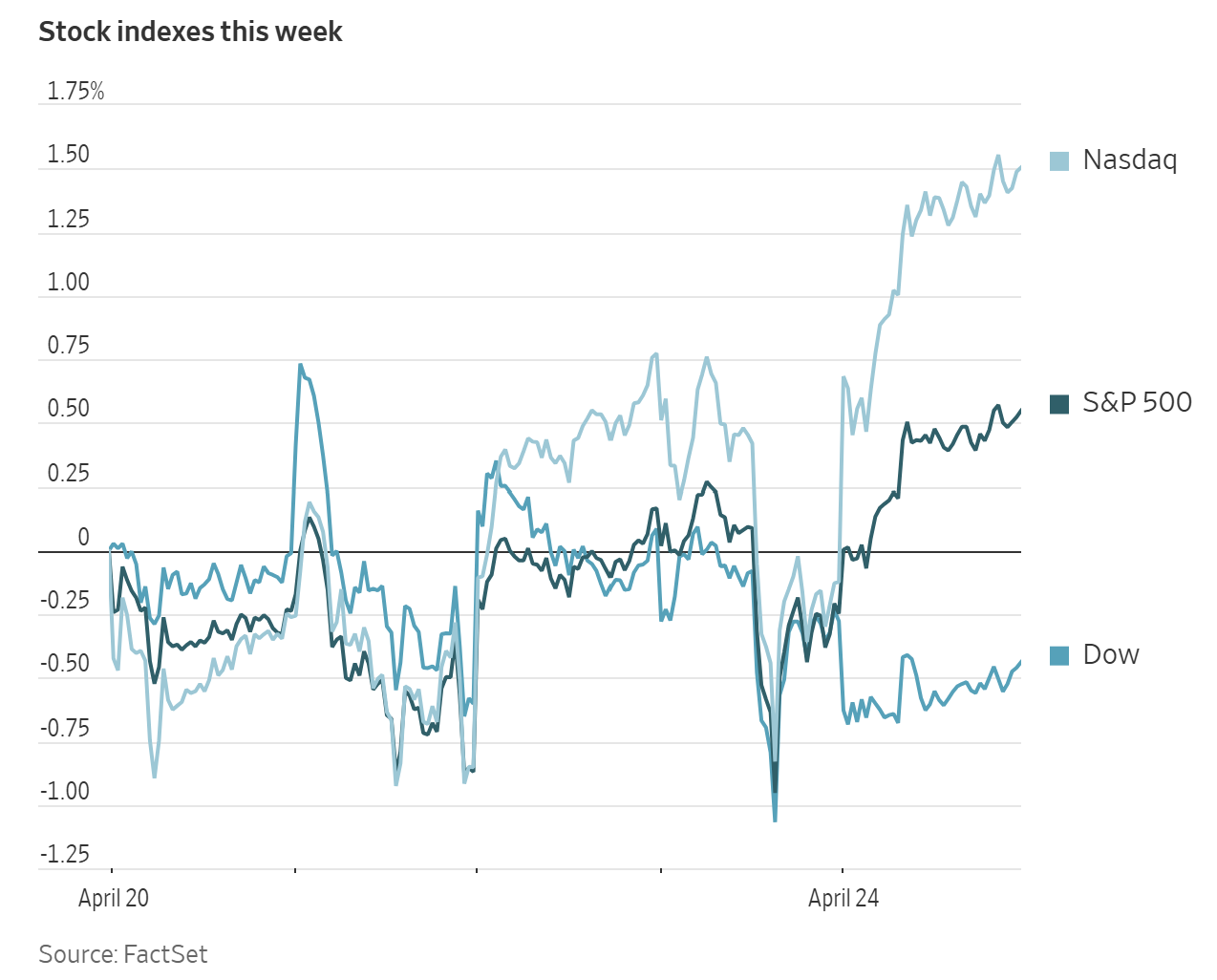
A breakneck rally in Intel shares propelled both the S&P 500 and Nasdaq to new record highs on Friday as investors chose to overlook prevailing geopolitical risks and increased their exposure to technology stocks.
Intel advanced +23.70%, achieving its first record high since the peak of the dot-com era in 2000. This performance followed the company’s announcement of stronger sales and substantial demand for its central processing units (CPUs) from data centres.
The rally contributed to a +1.63% rise in the Nasdaq, marking its fifth all-time high of the year. The S&P 500 increased +0.80%, reaching its ninth record in 2026. In contrast, the Dow Jones Industrial Average, which removed Intel from its roster in 2024, declined -0.16%.
Intel’s exceptional results are part of a robust earnings season, which has supported market resilience amid volatility triggered by the conflict in Iran.
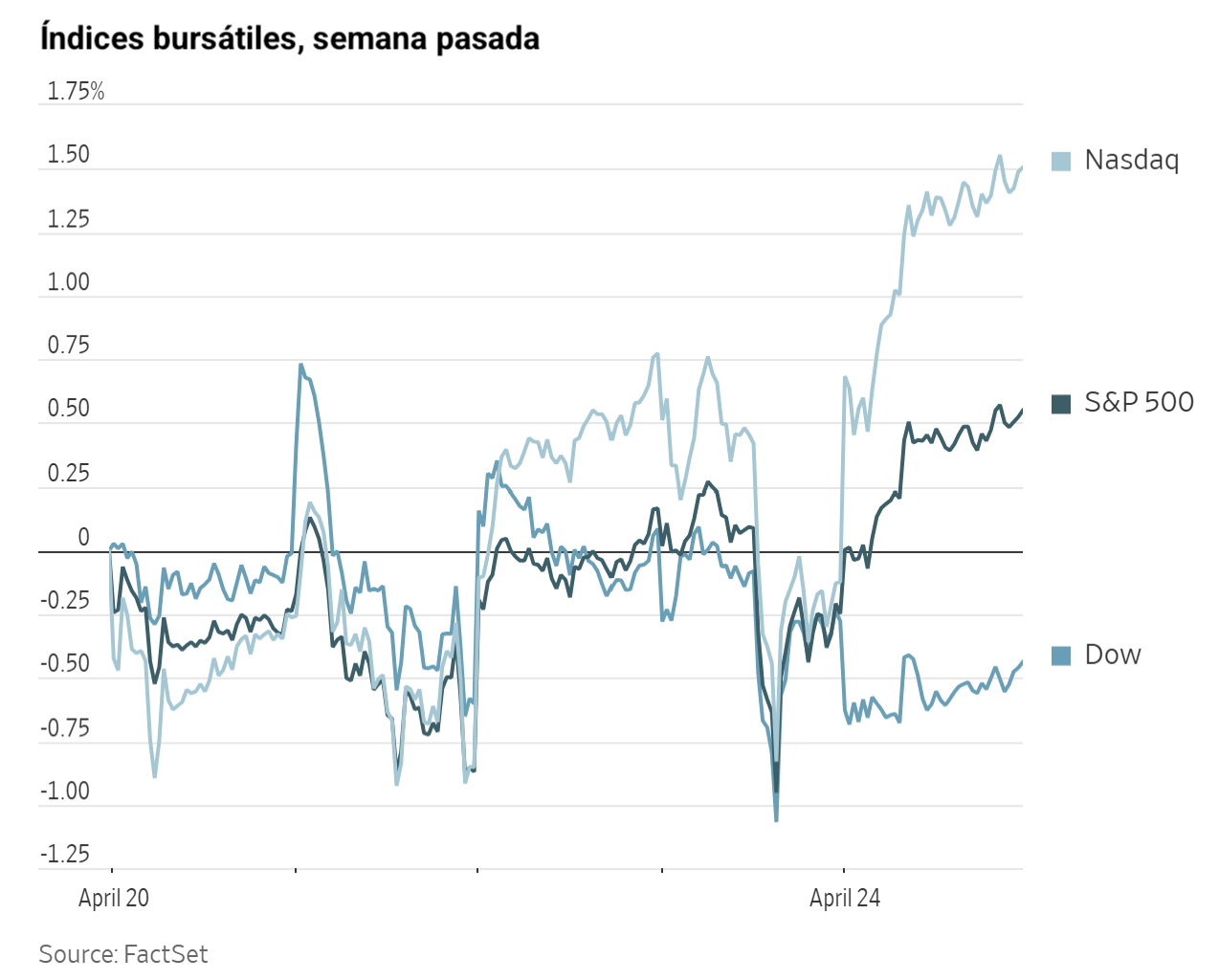
The S&P 500 recorded a weekly gain of +0.79%, while the Nasdaq advanced +1.77%. Both indexes notched their fourth consecutive week of gains. The Dow, however, fell -1.05% over the week.
Investor confidence in the technology sector extended throughout the semiconductor industry, leading the PHLX Semiconductor Index to its 18th consecutive gain, its longest streak on record, according to Dow Jones Market Data. The index rose +10.02% during the week.
According to LSEG I/B/E/S data, y/o/y earnings growth for the S&P 500 in Q1 is projected to be +16.1%. This jumps to +17.2% when excluding the Energy sector. Of the 139 companies in the S&P 500 that have reported earnings to date for Q1 2026, 81.3% have reported earnings above analyst estimates, with 77.4% of companies reporting revenues exceeding analyst expectations. The y/o/y revenue growth is projected to be 9.7% in Q1, increasing to 10.2% when excluding the Energy sector.
Information Technology and Health Care, both at 100.0%, are the sectors with most companies reporting above estimates. Materials, with a surprise factor of 31.6%, is the sector that has beaten earnings expectations by the highest surprise factor. Within Communication Services, 50.0% of companies have reported below estimates. Communication Services is the sector with the lowest surprise factor of 0.0%, matching estimates on average. The S&P 500 surprise factor is 9.2%. The forward four-quarter price-to-earnings ratio (P/E) for the S&P 500 sits at 20.8x.
178 S&P 500 companies are scheduled to release their Q1 earnings reports this week.
In corporate news, Eli Lilly & Co.'s newly launched weight-loss medication Foundayo has experienced a slow start, as indicated by recent prescription data. This early performance highlights the challenges the company may face in its efforts to compete with rival Novo Nordisk.
Newmont, the world’s largest gold producer, has announced plans to repurchase $6 billion worth of shares, aiming to reward shareholders amidst a historic surge in gold prices.
Alphabet’s Google has revealed intentions to invest up to $40 billion in additional capital in Anthropic. This comes as Anthropic secured commitments for as much as $65 billion in new funding this month. In February, the company raised $30 billion at a valuation of $380 billion.
Nike announced a workforce reduction of approximately 1,400 employees, representing about two percent of its global staff, as part of its strategy to streamline operations worldwide.
S&P 500 Best performing sector
Information Technology +2.46%, with Intel +23.60%, Advanced Micro Devices +13.91% and Qualcomm +11.12%
S&P 500 Worst performing sector
Health Care -1.37%, with HCA Healthcare -8.77%, Boston Scientific 5.51% and Moderna -4.01%
Mega Caps
Alphabet +1.35%, Amazon +3.49%, Apple -0.87%, Meta Platforms +2.41%, Microsoft +2.13%, Nvidia +4.32% and Tesla +0.69%
Information Technology
Best performer: Intel +23.60%
Worst performer: Roper Technologies -2.85%
Materials and Mining
Best performer: Newmont +8.68%
Worst performer: CF Industries -3.71%
Corporate Earnings Reports
Posted on Friday, 24 April from The Pulse, our real-time AI-driven news tool. Available exclusively on the EXANTE Web Platform
Procter & Gamble reported Q3 2026 earnings with core EPS $1.59 beating est $1.56, organic sales +3% beating +1.86% est, net sales $19.124 bn, missing $20.58 bn est, gross margin 49.5%. Key segments beat: Baby/Feminine/Family Care +3% vs +1.47%, Beauty +7% vs +2.47%. Maintains FY core EPS $6.83-$7.09 vs est $6.96, organic sales +4% vs +1.45% est. The CFO cited commodity costs as a headwind.
European Stock Indices
CAC 40 -0.84%
DAX -0.11%
FTSE 100 -0.75%
Commodities
Gold spot +0.34% to $4,708.69 an ounce
Silver spot +0.84% to $75.67 an ounce
West Texas Intermediate -2.19% to $94.88 a barrel
Brent crude -0.50% to $105.90 a barrel
Gold advanced on Friday, yet posted its first weekly decline in five weeks, as persistent inflation concerns and the ongoing uncertainty surrounding the US-Iran conflict continued to unsettle financial markets.
Spot gold increased +0.34% to $4,708.69 per ounce, having gained over one percent earlier in the session. Nevertheless, it fell -2.48% over the course of the week.
Spot silver rose +0.85% to $75.67 per ounce on Friday, although it registered a weekly loss of -6.33%.
Oil prices experienced significant volatility on Friday, ultimately ending the week higher as market participants weighed ongoing supply disruptions against the potential resumption of peace talks between the US and Iran.
Brent crude futures settled at $105.90 per barrel, representing a decline of $0.53, or -0.50%. US WTI futures closed at $94.88 per barrel, dropping $2.12, or -2.19% on the day. Despite these daily losses, Brent rose +15.12% for the week while WTI advanced +10.88%.
Earlier in the session, oil prices surged by two percent on renewed concerns of military escalation in the region, following Iran’s release of footage showing commandos boarding a cargo vessel in the Strait of Hormuz and a lack of progress in reopening this critical maritime route.
Ongoing losses in global oil production are estimated at up to 14 million barrels per day (bpd), alongside declining strategic reserves and further draws on both land-based and floating inventories.
Diplomatic efforts remain at an impasse as the US and Iran have yet to reach a permanent peace agreement. President Trump extended the ceasefire for an additional three weeks, while the US naval blockade of Iran persists. Tensions remained elevated, with threats from the US President to destroy any vessel suspected of mining the Strait, Iran seizing at least two ships and ongoing skirmishes between Israel and Hezbollah; all of which threaten the fragile US - Iran truce.
Reports suggest internal divisions within Iran’s leadership, particularly between the current administration and the Islamic Revolutionary Guard Corps (IRGC), have hindered peace negotiations. The blockade is also viewed by Iran as a violation of the ceasefire. Iranian Foreign Minister Araghchi is set to visit Pakistan, Oman and Russia for discussions on the conflict.
The effects are being felt globally, with jet fuel shortages at the forefront of concerns. Airlines continue to cancel flights. The EU is considering measures requiring member states to maintain jet fuel reserves or redistribute supplies to address regional shortages. Goldman Sachs forecasts that total visible global crude stockpiles could reach historic lows by the end of this week.
In China, crude inventories have fallen by less than one million barrels since the onset of the conflict, according to Energy Aspects, as imports of Iranian crude have reached record levels. While major Chinese state refiners have reduced operations by approximately 14% since February, independent ‘teapot’ refineries have increased utilisation rates.
At the FT Commodities Global Summit, major trading firms offered their perspectives on the market impact. Energy commodities trader Gunvor estimated a loss in oil demand of one million bpd in March and 2.5 million bpd in April. The Swiss energy and commodity trading company Vitol’s CEO, Russell Hardy, suggested that 600 to 700 million barrels have already been lost due to the Iran conflict, a figure that could reach one billion barrels if the situation persists. He also estimated that the crisis has resulted in a loss of four million bpd in global demand. Independent global commodities trading group Trafigura Group projected that the conflict has led to a supply shortfall of one billion barrels, which could increase to 1.5 billion barrels should hostilities continue.
Attacks by Ukraine on Russian energy infrastructure, including the Tuapse export terminal and Russian oil refineries, have further destabilised the market. According to Reuters sources, Russian crude production has decreased by 300,000 to 400,000 bpd this month as a result of these attacks.
Note: As of 4 pm EDT 24 April 2026
Currencies
EUR +0.17% to $1.1705
GBP +0.30% to $1.3506
Bitcoin -0.45% to $77,575.76
Ethereum -0.46% to $2,315.88
The US dollar declined on Friday, pressured by the Justice Department’s closure of its investigation into Fed Chair Jerome Powell and by increasing optimism that negotiations to end the US-Israel-led conflict with Iran may soon commence.
The dollar index dropped -0.28% to 98.51, while the euro appreciated +0.17% to $1.1705. Over the week, the dollar index registered a +0.29% gain, whereas the euro recorded a -0.48% loss for the same period.
The Japanese yen strengthened +0.17% against the US dollar, closing at ¥159.37 per dollar. The British pound advanced +0.30% to $1.3506. For the week, however, the yen declined -0.48% against the dollar, while the pound depreciated -0.06%.
Throughout the ongoing conflict, the euro has been influenced by competing factors, at times buoyed by hopes for a near-term peace agreement, and at others facing selling pressure by concerns that a prolonged war could cause lasting disruptions in global energy markets.
Looking ahead, market participants are preparing for a significant week of central bank meetings, with policy decisions expected from the Fed, the BoJ, the ECB and the BoE.
The Fed is anticipated to maintain its current policy stance, as officials balance the risk of renewed inflation stemming from the Iran conflict against continued resilience in the US economy.
The ECB is expected to leave its deposit rate unchanged at its 30 April meeting; however, a rate increase is likely in June as policymakers seek to shield the euro area economy from energy shocks resulting from the conflict.
The BoE is scheduled to meet on Thursday. While markets are pricing in a rate hike by year-end, no change is expected at the forthcoming meeting.
In Japan, core consumer inflation in March remained below the BoJ’s 2% target for the second consecutive month. Analysts anticipate that inflationary pressures will intensify in the coming months as companies begin to pass on higher fuel costs related to the Middle East conflict.
The BoJ is expected to conclude its two-day policy meeting on Tuesday, with consensus pointing toward a hold on interest rates, as ongoing uncertainty about the war’s resolution clouds the nation’s economic and inflation outlook. Nevertheless, the central bank is anticipated to signal its willingness to tighten policy should inflationary pressures escalate.
Japanese Finance Minister Satsuki Katayama reiterated on Friday that authorities remain prepared to take ‘decisive’ action against speculative movements in the foreign exchange market, following earlier statements emphasising Japan’s capacity and willingness to intervene when necessary and highlighting the effectiveness of previous interventions.
Fixed Income
US 10-year Bond -2.2 basis points to 4.307%
German 10-year Bund -1.4 basis points to 2.997%
UK 10-year gilt -25.3 basis points to 4.994%
US Treasuries firmed on Friday amid volatile trading, as developments in the Middle East remained in focus following reports of possible peace negotiations between Washington and Tehran, raising optimism for a resolution to the ongoing conflict.
In afternoon trading, the 10-year Treasury yield declined -2.2 bps to 4.307%. However, the 10-year yield was +5.6 bps over the week, marking its largest weekly gain since mid-March.
The yield on the US 30-year Treasury was -0.3 bps lower on the day at 4.912%, remaining unchanged on a weekly basis.
At the shorter end of the curve, the US two-year yield, indicative of interest rate expectations, fell -5.5 bps to 3.791%. However, over the week, the yield advanced +7.9 bps, representing the largest weekly increase since 16 March.
The yield curve flattened last week, with the spread between two- and ten-year yields narrowing to 51.6 bps, compared to 53.9 bps in the previous week. This movement reflected a bear flattening, as shorter-term yields increased more significantly than those of longer maturities, signalling market expectations for higher inflation in the near term.
The end of the investigation into Fed chair Jerome Powell has improved the likelihood of Kevin Warsh's confirmation as next Fed chair. Earlier last week, Republican Senator Thom Tillis urged the Department of Justice to discontinue its probe into the Fed's construction project, thereby enabling the confirmation process for President Trump's nominee to move forward.
According to CME Group's FedWatch Tool, Fed funds futures traders are pricing in 5.7 bps of rate cuts in 2026, lower than the 16.0 bps priced in a week ago. Fed funds futures traders are now pricing in a 0.0% probability of a 25 bps rate hike at this week’s FOMC meeting, lower than last week’s 1.0% probability.
Eurozone short-term government bond yields recorded their largest weekly increase in more than a month, as heightened tensions in the Strait of Hormuz pushed energy prices higher, fuelling inflation concerns and raising expectations for a potential ECB rate hike.
Germany’s two-year yield, sensitive to ECB policy expectations, declined -0.7 bps on Friday to 2.551%, yet posted a weekly gain of +14.1 bps, marking the strongest rise since mid-March.
The 10-year German yield also moved lower on the day, falling -1.4 bps to 2.997%, but still advanced +3.3 bps over the course of the week. At the long end of the maturity spectrum, the 30-year yield declined -0.9 bps on Friday, culminating in a weekly decrease of -1.8 bps.
The ECB is scheduled to meet this week and is expected to maintain interest rates at current levels. However, market participants anticipate the central bank will place greater emphasis on curbing inflation, even if such measures come at the expense of short-term economic growth.
Highlighting the challenges faced by policymakers, data released on Friday indicated that German business sentiment declined more than anticipated in April. The ongoing US-Israel-led conflict with Iran has increased pessimism among companies and threatens the anticipated recovery of Europe’s largest economy.
Italy’s 10-year government bond yields rose +1.9 bps to 3.802%, contributing to a weekly increase of +10.8 bps. The yield spread between Italian government bonds and Bunds widened to 80.5 bps, its highest level since 8 April, the day following the announcement of the US - Iran ceasefire, and 7.5 bps above the previous week’s level of 73.0 bps.
Note: As of 4 pm EDT 24 April 2026
While every effort has been made to verify the accuracy of this information, EXT Ltd. (hereafter known as “EXANTE”) cannot accept any responsibility or liability for reliance by any person on this publication or any of the information, opinions, or conclusions contained in this publication. The findings and views expressed in this publication do not necessarily reflect the views of EXANTE. Any action taken upon the information contained in this publication is strictly at your own risk. EXANTE will not be liable for any loss or damage in connection with this publication.
This article is provided to you for informational purposes only and should not be regarded as an offer or solicitation of an offer to buy or sell any investments or related services that may be referenced here. Trading financial instruments involves significant risk of loss and may not be suitable for all investors. Past performance is not a reliable indicator of future performance.








Created by professionals. For professionals.
