

What price clears Europe’s winter gas market?


 S&P 500 -0.77% to 7,683.69 US 10-year yield +7.9 basis points to 5.244% Spot gold -4.01% to $4,114.27 an ounce DXY +0.15% at 101.19
Key data to move markets today
EU: Spanish Harmonized Index of Consumer Prices and Retail Sales, European Commission's Business Climate, Consumer Confidence, Economic Sentiment Indicator and Services Sentiment Indicators and speeches by ECB President Christine Lagarde, Vice President Boris Vujčić, Chief Economist Philip Lane, Executive Board members Frank Elderson and Piero Cipollone and Banco de España’s Governor José Luis Escrivá
UK: A speech by BoE MPC External Member Alan Taylor
USA: Housing Price Index, Consumer Confidence, JOLTS Job Openings and speeches by St. Louis Fed President Alberto Musalem, Chicago Fed President Austan Goolsbee, Fed Governors Michelle Bowman, Michael Barr and Christopher Waller
JAPAN: Large Retail Sales and Retail Trade
CHINA: NBS Manufacturing and Non-manufacturing PMIs and RatingDog’s Manufacturing and Services PMIs
Global Macro Updates
Qatar makes Europe pay for optionality. European gas has settled into an uneasy version of calm. Dutch front-month TTF is hovering near €72/MWh after last week’s 9 per cent rise, below September’s €83-plus peak but still more than double its pre-war level. QatarEnergy has extended force majeure for Asian buyers into November and for Italy’s Edison into December, while Tehran and Washington remain some distance apart on reopening the Strait of Hormuz.
EU storage is roughly 70 per cent full, against a five-year norm near 85 per cent, with Germany at just 57 per cent. Furthermore, backwardation has made summer injections commercially unattractive, as traders are being asked to buy expensive prompt gas and store it for sale at lower forward prices. If Hormuz remains unreliable, Europe must offset curtailed Qatari supply, normally about one fifth of global LNG, by securing flexible Atlantic cargoes and outbidding Asian buyers. It must then move the gas through a network constrained by regasification, cross border capacity and transmission tariffs. Storage ordinarily supplies about one-third of winter consumption, so a cold snap quickly turns an inventory deficit into a bidding war.
That is why Brussels now describes this as a price crisis linking to a supply crisis, despite seeing no immediate shortage, and is urging demand restraint. Goldman Sachs’s roughly €70/MWh Q4 baseline assumes flows recover gradually; persistent disruption could require prices above €100/MWh to destroy enough Asian demand and redirect cargoes westward. Morgan Stanley’s cold-winter tail reaches €200/MWh.
However, this is not a 2022 redux. Europe now has more LNG terminals, diversified pipeline supply, lower structural gas demand and more renewables; corporate hedging is also better. But 2022 was chiefly a European pipeline shock. This one is a global LNG squeeze, making Europe’s marginal supply dependent on Asian demand and shipping security.
For investors, the inflation channel matters more than outright rationing. Higher gas feeds power, household tariffs, industrial costs and eventually food and services; JPMorgan estimates roughly a one-percentage-point uplift to year-end eurozone and UK inflation under its central conflict scenario. That leaves European duration, gas-intensive industry and ECB easing expectations hostage to tanker traffic and, critically, the weather forecast.
US Stock Indices
Dow Jones Industrial Average -0.67%
Nasdaq 100 -1.08%
S&P 500 -0.77%, with 8 of the 11 sectors of the S&P 500 down
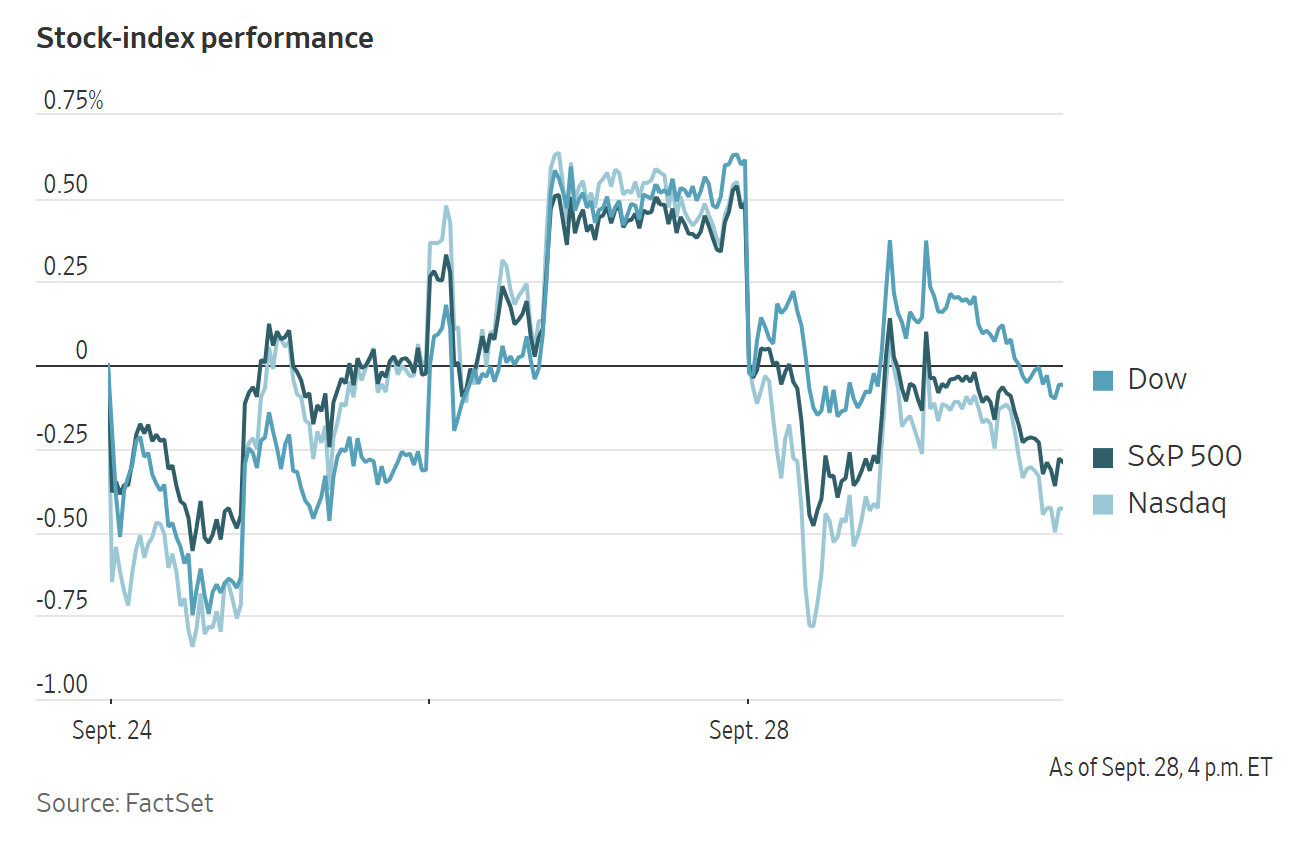
A relentless bond-market selloff drove a volatile start to the trading week. The Nasdaq Composite fell -0.92% after recouping some earlier losses, while the S&P 500 posted its worst session in more than a month, declining -0.77%. The Dow Jones Industrial Average dropped -0.67%, or 347.11 points.
Nvidia increased its share-repurchase programme by $150 billion, lifting its total authorisation to $235 billion. It is the largest US stock buyback on record and surpassing Apple’s $110 billion programme announced in May 2024. Nvidia plans to return excess free cash flow from its investments through buybacks and a gradually rising dividend.
Kodiak Sciences shares posted their largest one-day gain on record Monday after the company said its eye drug matched Regeneron’s blockbuster Eylea in a Phase 3 trial. More than half of wet age-related macular degeneration patients receiving experimental drug Zenkuda went six months between injections, compared with the typical two-month interval for Eylea. Kodiak plans to seek FDA approval for Zenkuda in Q4.
Paramount Skydance drew sufficient demand for a roughly $44 billion bond sale to finance its acquisition of Warner Bros. Discovery after offering yields of up to about 9%, as reported by Bloomberg news. As of Monday morning, the riskier $12.4 billion-equivalent junk-bond portion had attracted more than $23 billion in orders, while demand for the investment-grade offering exceeded $51 billion. The sale is part of a $52 billion financing package that also includes $7.5 billion in loans, and Paramount aims to issue eight tranches of first-lien US dollar notes maturing in two to 40 years.
SpaceX’s Starship reached orbit for the first time Monday morning, marking a major programme milestone. The rocket successfully deployed 26 upgraded Starlink satellites into the company’s space-based internet network. An earlier engine failure shortened the mission, and the vehicle splashed down in the Pacific Ocean near Hawaii about three hours after launch.
European Stock Indices
CAC 40 +0.01%
DAX -0.13%
FTSE 100 -0.10%
Commodities
Gold spot -4.01% to $4,114.27 an ounce
Silver spot -5.92% to $60.45 an ounce
West Texas Intermediate +0.92% to $93.29 a barrel
Brent crude +1.62% to $106.10 a barrel
Spot gold fell more than four percent hitting an intra-day low of $4,111 an ounce on Monday, its lowest since 5 August, before settling -4.01% lower at $4,114.27.
US Commodity Futures Trading Commission data for the week ended 22 September showed that money managers’ net long gold positions fell to their lowest level since late July.
According to the World Gold Council, gold-backed ETFs posted modest outflows of 1.6 metric tons last week, while holdings remained substantial at 4,249 tons.
Further weighing on the outlook, demand in China, the top consumer, softened ahead of the 1 - 7 October holiday, while local premiums to the global benchmark fell to zero by the end of last week.
Spot silver prices declined -5.92% to $60.45.
Brent futures rose $1.69, or +1.62%, to settle at $106.10 per barrel, while WTI gained $0.85, or +0.92%, to $93.29 per barrel. Both benchmarks closed well below their early-morning highs of $108.85 and $96.55, respectively.
The November Brent contract expires Wednesday afternoon, while the December contract rose +0.40% to $97.83. Prices initially strengthened after the US President rejected an Iranian peace proposal on Saturday, although he told Axios that he expects US negotiators to hold further talks this week.
Both benchmarks pared gains shortly after 8:00 am ET following reports that mediators would hold separate discussions with the US and Iran. Shortly after 1:00 pm ET, another report indicated that Iran had agreed to halt enrichment in exchange for eased US sanctions.
Bloomberg news reported that Saudi Arabia had resumed oil exports through the East–West pipeline, with flows reaching 3.5 million bpd.
According to Kpler data reported by Reuters, crude exports from major Middle Eastern producers rebounded to 12.8 million bpd in September, their highest level since the war began. Saudi exports averaged 6.27 million bpd through 24 September, more than 80% above the August level.
Libya’s NOC said on Monday that production at the Sharara oilfield had recovered to more than 300,000 bpd from less than 100,000 bpd the previous week, Reuters reported.
Note: As of 4 pm EDT 28 September 2026
Currencies
EUR -0.23% to $1.1365
GBP +0.02% to $1.3254
Bitcoin -0.70% to $83,200.17
Ethereum -0.26% to $2,674.01
The US dollar edged higher against major currencies on Monday. The dollar index increased +0.15% to 101.19, remaining close to a two-month high. The euro fell -0.23% to $1.1365.
Sterling recovered modestly from multi-month lows against the dollar and euro on Monday as investors priced in tighter BoE policy amid mounting inflationary pressures.
Sterling rose +0.02% to $1.3254 but remained near a three-month low against the dollar. Against the euro, it gained +0.20% to 85.75 pence after touching its weakest level since 1 July on Friday.
BoE Governor Andrew Bailey said on Friday that persistently high energy prices would make it more difficult for Threadneedle Street to keep interest rates unchanged. Deputy Governor Dave Ramsden added on Monday that a rate increase could be warranted if upside inflationary pressures continued to build.
Money markets priced an 85% probability that the BoE would raise rates by 25 bps to 4.00% at its November meeting, with four increases priced in by mid-next year.
In the UK, attention is gradually shifting to the government’s finances ahead of the Autumn Budget on 28 October.
Japan’s top currency diplomat, Atsushi Mimura, said on Monday that markets should take at face value the ‘very clear’ message from Tokyo and Washington regarding their concerns over yen weakness.
Despite those warnings, the yen fell -0.06% to ¥157.35 per dollar.
Japanese officials face conflicting pressures. The Iran war has pushed oil prices and US yields higher, supporting dollar-yen, while Tokyo has sought to restrain the pair through verbal intervention, citing US support. Interest-rate differentials remain a key driver of the exchange rate.
Upcoming data, including Wednesday’s PCE Index and Friday’s nonfarm payrolls report, are expected to remain consistent with further policy tightening.
Fixed Income
US 10-year Treasury +7.9 basis points to 5.244%
German 10-year Bund +5.0 basis points to 3.650%
UK 10-year Gilt +6.7 basis points to 5.422%
The 2026 bond-market selloff is rapidly approaching another milestone.
The 10-year US Treasury yield settled at 5.244%, a fresh 19-year closing high, up from 5.165% on Friday. Earlier, the benchmark’s bid yield reached an intraday high of 5.272%, also a 19-year peak and close to a 24-year high.
The key level is 5.303%, last reached on 12 June 2007 amid high interest rates and rising oil prices. A move above that threshold would place the 10-year yield at its highest level since May 2002, when yields were still retreating from the double-digit peaks of the 1980s.
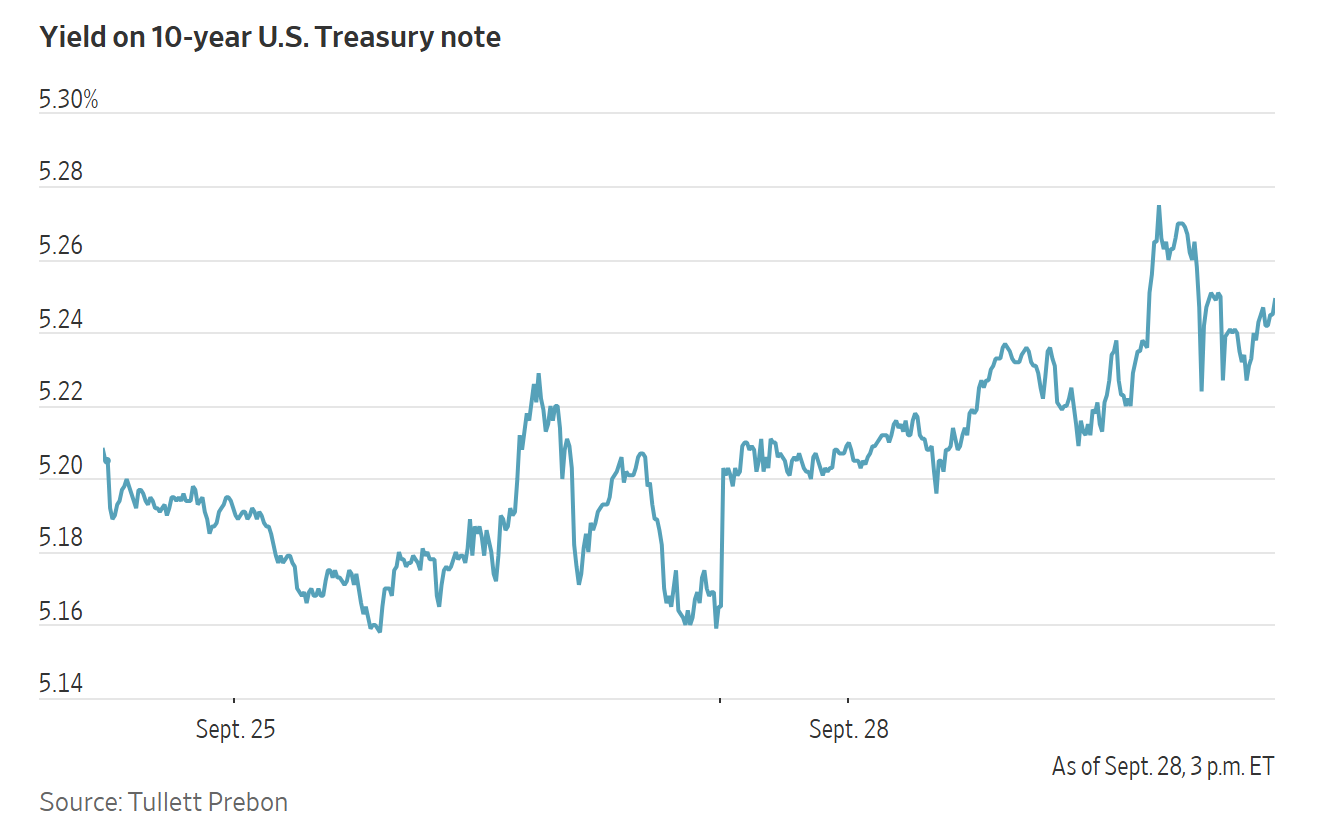
Earlier in the session, the 30-year Treasury yield reached its highest level since mid-May 2004, while the 2-year yield touched its highest point since May 2024.
According to CME Group’s FedWatch, traders raised the implied probability of a 25 bps Fed rate increase in October to 70.3% from 64.2% on Friday and increased the probability of another 25 bps hike in December to 59.9%.
Fedspeak on Monday retained a tightening bias. Fed Governor Lisa Cook said AI-related demand and higher oil prices were likely to sustain inflationary pressure in the coming months, although she stopped short of calling for further rate increases.
The 10-year US Treasury yield rose for a fifth consecutive session, increasing +7.9 bps to 5.244%.
The 30-year Treasury yield also advanced for a fifth consecutive session, rising +5.6 bps to 5.552% after reaching 5.583%.
The 2-year Treasury yield, which typically tracks Fed policy expectations, increased +6.7 bps to 4.935%, below its session high of 4.956%.
The US 2s10s yield curve steepened by 1.2 bps to 30.9 bps after narrowing to 28.5 bps earlier in the session.
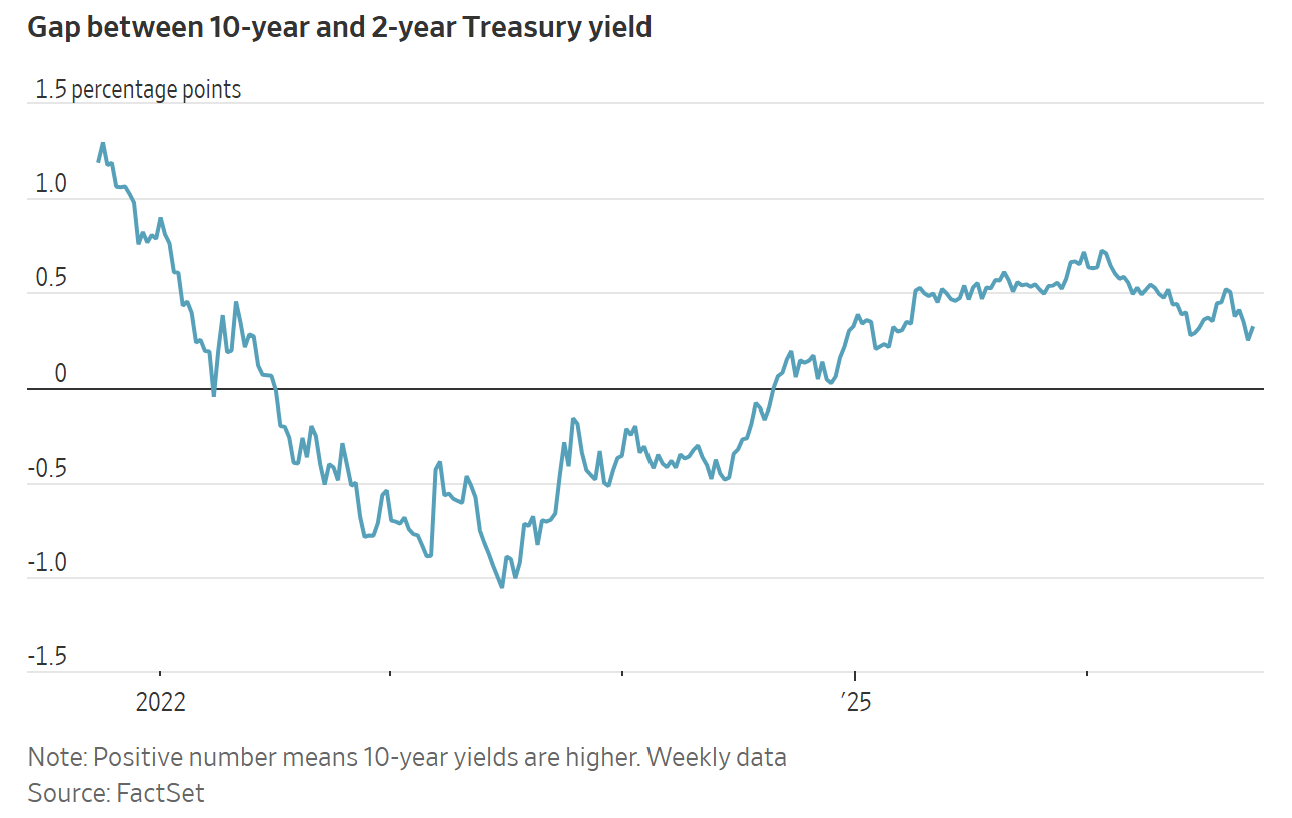
Eurozone government bond yields rose on Monday.
Germany’s 10-year Bund yield rose +5.0 bps to 3.650%, its highest level since June 2009. The yield recorded a seventh consecutive weekly increase last week and is on track to rise by more than 31 bps this month.
After last week’s data again indicated unexpected resilience in the eurozone economy, attention has shifted to flash inflation figures due later this week, which could reshape rate expectations.
Eurozone inflation is expected to have accelerated to 3.6% in September from 3.2% in August.
Germany’s 2-year Bund yield, which is more sensitive to ECB deposit-rate expectations, rose +3.3 bps to 3.310% after posting a seventh consecutive weekly increase. It is on track for a monthly rise of more than 37 bps, its largest since March, shortly after the Iran war began.
Note: As of 4 pm EDT 28 September 2026
While every effort has been made to verify the accuracy of this information, EXT Ltd. (hereafter known as “EXANTE”) cannot accept any responsibility or liability for reliance by any person on this publication or any of the information, opinions, or conclusions contained in this publication. The findings and views expressed in this publication do not necessarily reflect the views of EXANTE. Any action taken upon the information contained in this publication is strictly at your own risk. EXANTE will not be liable for any loss or damage in connection with this publication.
本文提供给您仅供信息参考之用,不应被视为认购或销售此处提及任何投资或相关服务的优惠招揽或游说。金融工具交易存在重大亏损风险,未必适合所有投资者。过往表现并非未来业绩的可靠指标。







由专业人士创建。 为专业人士。
