

Nvidia and Jackson Hole: how will markets move?


 S&P 500 -1.43% last week to 7,674.37 US 10-year yield +3.9 basis points last week to 4.736% Spot gold +5.18% last week to $4,602.61 an ounce DXY -1.25% last week to 98.39
Key data to move markets today
USA: 3- and 6-Month billauctions
Global Macro Updates
Treasury Secretary Bessent to unveil an Iran economic-pressure plan today. According to Bloomberg news, Bessent foreshadowed a Monday announcement of financial measures targeting Iran, with the measures expected to apply pressure on countries assisting Tehran. This places immediate attention on China, Iran’s largest trading partner. Iran has endured and adapted to decades of severe economic sanctions, making it unclear what additional measures the US could impose that Tehran has not already experienced.
Although the US has previously threatened secondary sanctions over Iran, questions remain over the likelihood of follow-through, given the risk of escalating trade tensions ahead of President Xi’s visit to Washington next month. There is also skepticism over whether additional financial sanctions would compel Iran to abandon its claims over the Strait of Hormuz. US-assisted shuttle runs are believed to be helping contain crude prices, although some market participants argue that investors are underestimating mounting stress in refined products.
US Stock Indices
Dow Jones Industrial Average +0.98%
Nasdaq 100 +0.33%
S&P 500 +0.43%, with 7 of the 11 sectors of the S&P 500 up
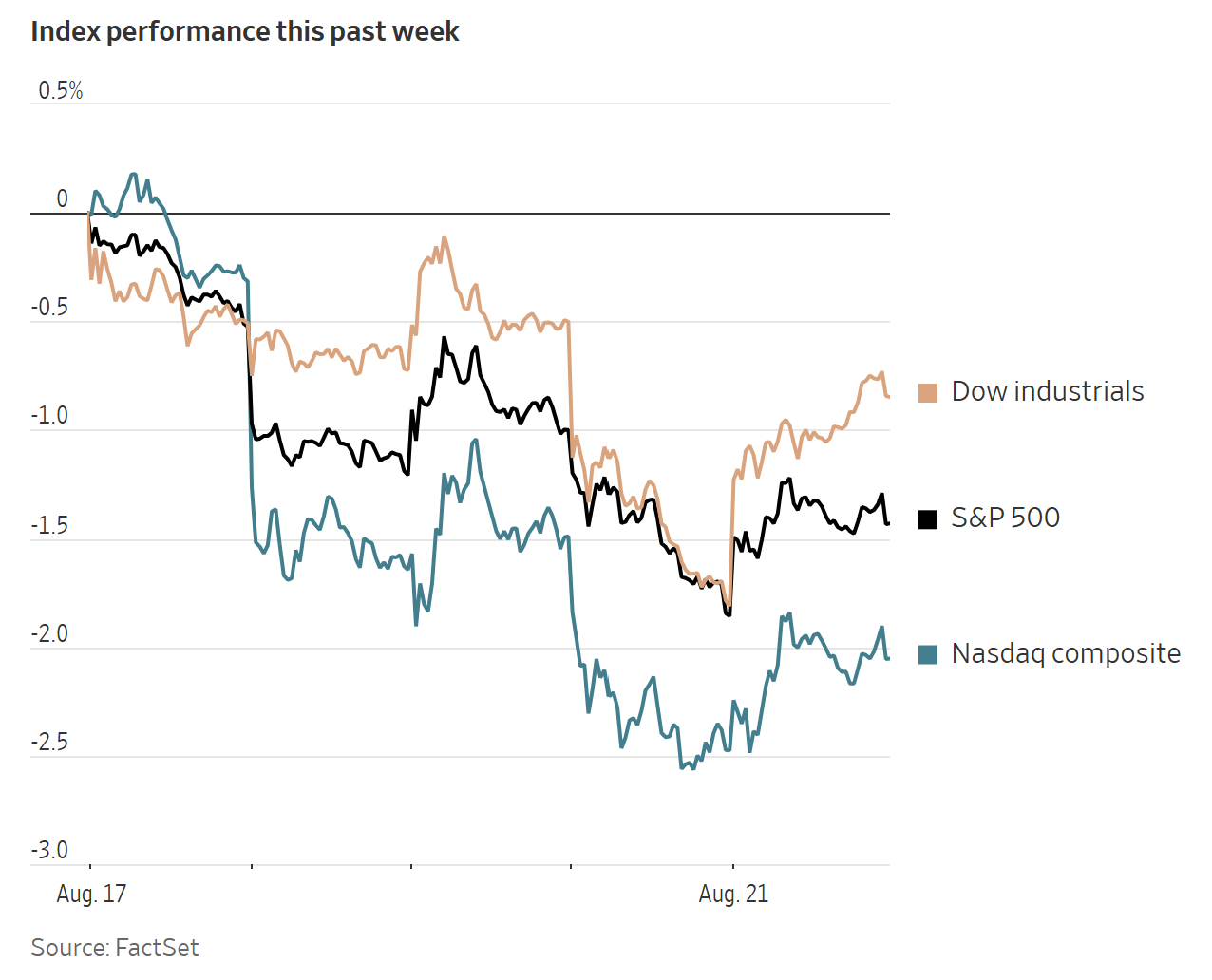
Bond yields remained near their highest levels in more than a decade despite Treasury Secretary Scott Bessent’s efforts to contain borrowing costs. US equities rose on Friday, with the Dow gaining 517.80 points, or +0.98%, while the Nasdaq Composite and the S&P 500 each advanced +0.43%. Even so, all three major benchmarks finished the week lower: the S&P 500 declined -1.43%, the Nasdaq Composite fell -2.05% and the Dow Jones Industrial Average traded -0.85% lower.
The 30-year Treasury yield ended the week at 5.275%, while the 10-year yield closed at 4.736%. Bessent said Thursday that the Treasury had a ‘big toolkit’ available for the market and added that the administration would announce an ‘increased focus on fiscal consolidation’ in the coming days.
In corporate news, Bloomberg news reported that Samsung Electronics plans to return as much as KRW 110 trillion, or US$80 billion, to investors this year, broadly in line with earlier press reports. A regulatory filing on Friday showed that the company intends to distribute about half of its free cash flow to shareholders, including KRW 30 trillion in cash dividends planned for Q3, while also targeting KRW 15 trillion of share buybacks for employee compensation. Samsung did not specify how it would distribute the remainder of the targeted amount. The plan would rank among the largest shareholder-return initiatives on record, although Samsung shares fell in post-market trading as some investors had anticipated a return of as much as KRW 150 trillion. The announcement followed SK Hynix’s capital-return plan earlier in the week and was viewed by analysts as another step toward a more shareholder-focussed management approach.
Anthropic PBC has hired Amir Salek, a founder of Alphabet’s Google custom-chip programme, as the AI lab lays the groundwork for a potential move into developing its own semiconductors.
Nscale is seeking to raise as much as US$3 billion in a US IPO, according to people familiar with the matter cited by Bloomberg news, joining a wave of AI data centre companies seeking capital from public-market investors. The company has about$51 billion of contracted revenue ahead of the listing and is developing data centres in locations including Norway and West Virginia. Nscale is also working to add 10 gigawatts of power capacity for its AI computing centres. It has agreed to acquire software startup Anyscale in a $1.65 billion deal aimed at helping customers use AI computing power more efficiently.
European Stock Indices
CAC 40 +0.37%
DAX +0.59%
FTSE 100 +0.64%
Commodities
Gold spot +1.88% to $4,602.61 an ounce
Silver spot +1.44% to $68.97 an ounce
West Texas Intermediate -0.10% to $86.64 a barrel
Brent crude +0.75% to $93.90 a barrel
Gold rose to its highest level in more than three months on Friday, securing a third consecutive weekly gain as prices broke above key technical levels The rise was attributable to concerns around rising debt levels and a softer dollar.
Spot gold advanced +1.88% to $4,602.61 per ounce, after earlier reaching $4,631.99 per ounce, its highest level since 15 May.
Gold prices rose +5.18% over the week, supported by Wednesday’s strongest one-day gain since early February. The metal is also trading above all major moving averages, after breaking through the 200-day moving average near $4,513 per ounce.
On physical demand, the recent rally continued to deter retail buyers in India, while demand in top consumer China remained steady. Separately, Poland’s central bank slowed its gold purchases to 7.8 metric tons in July, according to data released on Friday.
Spot silver gained +1.44% to $68.97 per ounce, bringing its weekly increase to +6.67%.
WTI and Brent traded at their strongest levels in a month, rising every day during the week, as the US shifted away from ceasefire talks with Iran and moved toward intensifying economic pressure on Tehran. The shift is likely to prolong disruptions to traffic through the Strait of Hormuz and the Bab el-Mandib strait.
Brent crude futures settled at $93.90 per barrel, up 70 cents, or +0.75%, while US WTI crude settled at $86.64 per barrel, down 9 cents, or -0.10%.
Over the week, Brent gained +5.96% and WTI rose +5.15%, with both benchmarks touching their highest levels since 24 July in the prior session.
On Wednesday night, the US President announced plans to increase economic pressure on Iran and warned of economic consequences for any countries attempting to provide Tehran with a financial lifeline. The UAE also announced on Tuesday that it had cut off all trade, commercial exchanges and financial transactions with Iran following recent attacks. The UAE has been a major financial and business hub for Iran and Iran’s largest regional trade partner, while China remains Iran’s largest overall trade partner.
Offers of Iranian crude to Chinese buyers have declined and prices rose last week as the US blockade curtails Iranian shipments and the threat of additional sanctions from Washington remains in focus.
Although activity has moderated from prior peaks, Iran continued attacks on ships in and around the Strait of Hormuz and on neighbouring countries. The Houthis maintained attacks targeting Saudi vessels and onshore energy infrastructure in Saudi Arabia. Axios reported details of US efforts to escort tankers through the Strait of Hormuz as they collect oil from the UAE, Bahrain and Kuwait.
Commercial transit through the Strait of Hormuz remains a constraint, but it is no longer the sole narrative. Pipelines, shuttle routes, US shale output, a recovering though still bottlenecked Venezuela and an unconstrained UAE are all contributing additional barrels.
However, physical market prices continued to rise, while Vortexa tanker data showed crude on water falling by more than 200 million barrels over the past four weeks. At the same time, new signs of potential fuel shortages emerged in parts of Asia.
Ukraine continued its assault on Russian refining capacity, striking at least seven plants last week. Some estimates indicate that more than seventy percent of Russian gasoline stations are out of fuel.
US diesel cracks rose above $100 per barrel as US diesel stockpiles declined to their lowest seasonal level in 30 years.
After moving higher in July, China’s August crude imports are tracking 500,000 bpd lower m/o/m. India’s crude imports rose 9.0% m/o/m last month and were 13.0% y/o/y, while domestic refinery throughput increased 6.8% m/o/m. The administration will end summer-blend gasoline requirements about two weeks early this year.
Note: As of 4 pm EDT 21 August 2026
Currencies
EUR +0.03% to $1.1679
GBP +0.07% to $1.3640
Bitcoin +7.93% to $78,496.92
Ethereum +8.52% to $2,514.90
The dollar fell to a three-month low against the euro on Friday.
The dollar index fell -0.49% to 98.39, while the euro rose +0.03% to $1.1679. Earlier in the session, the single currency reached $1.1711, its highest level since 14 May. Over the week, the euro traded +0.95% higher.
Sterling rose +0.07% to $1.3640 after earlier reaching $1.3675, its highest level since 11 February. Last week, the British pound advanced +0.81% against the US dollar.
The Japanese yen strengthened +0.08% to ¥158.93 per US dollar after data showed core consumer inflation accelerated in July, reinforcing the case for a BoJ rate hike. The BoJ’s next policy meeting is scheduled for 17 - 18 September. Across the week, the yen traded +0.23% higher.
Fixed Income
US 10-year Treasury +3.0 basis points to 4.736%
German 10-year Bund +0.1 basis points to 3.276%
UK 10-year Gilt +5.8 basis points to 5.065%
US Treasury yields rose modestly on Friday after data showed a strong expansion this month in the US services sector.
The 2-year Treasury yield was +3.8 bps higher on Friday to 4.240% and +5.8 bps over the week. The 10-year yield was +3.0 bps higher on Friday at 4.736%, contributing to a weekly increase of +3.9 bps.
The 30-year bond yield, where the week’s main volatility was concentrated, rose +3.8 bps to 5.275% on Friday.
The US Treasury's surprise intervention on Wednesday brought barely a day of relief from the rout. Treasury Secretary Scott Bessent said he could further increase the government's repurchases of Treasuries, and floated the idea of fiscal consolidation.
The strongest growth in the US services sector in nearly two years powered a sharp acceleration in overall business activity in August. It offset a slowdown in the manufacturing sector, which was restrained by reduced stock building and supply disruptions from the Iran war.
S&P Global said on Friday its Flash Services PMI rose to 56.8, the highest level since December 2024, from 54.6 in July. That jump drove the Flash Composite Output Index up to 56.0, the highest reading since April 2022, from 54.5 last month.
There is little major economic data scheduled for this week beyond the release of US GDP and Personal Consumption Expenditures data early on Wednesday, followed by Nvidia earnings that evening. Fed Chair Kevin Warsh is expected to deliver the keynote speech on Friday morning at the US central bank’s annual Jackson Hole conference in Wyoming.
Eurozone government bond yields were slightly higher on Friday after a week dominated by stress in global bond markets.
Germany’s 10-year bond yield was +0.1 bps higher on the day at 3.276%, after reaching a fresh 15-year high earlier in the week. It rose +5.1 bps over the week, marking a second consecutive weekly increase.
Germany’s 30-year bond yield was +0.2 bps higher at 3.763%, contributing to a weekly rise of +2.9 bps.
Money markets are still pricing in at least one more interest rate hike from the ECB by year-end, with chances of a policy increase in September at over ninety percent.
Germany’s 2-year Schatz yield, which is more sensitive to interest-rate expectations, traded -0.4 bps lower at 2.856% and rose +4.5 bps over the week.
Over the week, Italy’s 10-year BTP yield rose +12.0 bps, leaving the spread over Bunds at 81.1 bps, +6.9 bps wider than the previous week. France’s 10-year OAT yield increased +7.8 bps, widening the spread over Bunds by +2.7 bps to 85.7 bps.
Note: As of 4 pm EDT 21 August 2026
While every effort has been made to verify the accuracy of this information, EXT Ltd. (hereafter known as “EXANTE”) cannot accept any responsibility or liability for reliance by any person on this publication or any of the information, opinions, or conclusions contained in this publication. The findings and views expressed in this publication do not necessarily reflect the views of EXANTE. Any action taken upon the information contained in this publication is strictly at your own risk. EXANTE will not be liable for any loss or damage in connection with this publication.
本文提供給您僅供資訊參考之用,不應被視為認購或銷售此處提及任何投資或相關服務的優惠招攬或遊說。金融商品交易涉及重大損失風險,可能不適合所有投資者。過往績效不代表未來表現。








由專業人士建立。為專業人士打造。
